Slayer's Forum Takeover, a 1985 Piss-Soaked Legend, and Why California's Legacy Scene Won't Quit
There's a particular kind of electricity that happens when a band born in the South Bay comes home to play the biggest room in town, and that's exactly what went down when Slayer took over the Kia Forum. The photo sets making the rounds this week capture it better than words can: a sea of denim and leather, pits opening up under a ceiling built for Lakers banners, and a band that essentially invented West Coast thrash metal reminding everyone why they never needed an opening act to justify the ticket price. Slayer formed in Huntington Park, played the Whisky and the Country Club before anyone outside Southern California knew their name, and watching them fill an arena that size in their own backyard is the kind of full-circle moment California metal fans wait years for.
It's worth remembering, too, that Slayer's rise wasn't some polished major-label fairy tale — it was built on the same chaos and gross-out mythology that defined the entire thrash underground in the mid-80s. Case in point: the resurfaced story this week about Tom Araya allegedly relieving himself on Venom's Cronos during the 1985 Ultimate Revenge tour bus ride. Nobody involved agrees on what actually happened — depending on who's telling it, there was a dare, a black eye, a betrayal, or some combination of all three — but the fact that this story still gets told and re-told four decades later says everything about how mythologized that era has become. Thrash wasn't just a genre, it was a pressure cooker of young bands from completely different scenes getting thrown together on buses with no rules and no handlers, and California's contribution to that chaos was outsized. Slayer, along with the Bay Area's death and thrash contingent, helped export a version of extremity that British, German, and Brazilian bands would spend the next decade answering back to.
The 80s Never Left — They Just Got a Tour Bus
Speaking of that era, there's a genuine nostalgia wave cresting right now, and it's not subtle. Geoff Tate spent part of this week reflecting on Queensrÿche's Rage For Order, which hits its 40th anniversary in 2026, talking about how the band was consciously trying to push past what they'd already done on their debut. That album's icy, synth-laced progressive metal was a hard left turn from the band's earlier sound, and it's aged into one of the more quietly influential records of the decade — the kind of album that shows up on best metal albums of all time lists more than casual fans might expect. Meanwhile, former Accept singer David Reece got up on stage with the band for the first time in 37 years to celebrate Accept's 50th anniversary, trading verses on "Hellhammer" and "Balls To The Wall." And Bruce Dickinson is prepping a new solo album, telling Rolling Stone Brasil in no uncertain terms that solo work lets him do "exactly what I want" without worrying about Steve Harris looking over his shoulder.
None of these are California stories on paper, but they matter enormously to the region because California is where this generation of 80s metal bands still plays its biggest American shows, and where the appetite for that sound has never really dimmed. Every one of these legacy acts eventually routes through Los Angeles, San Francisco, San Diego, or Sacramento, and every time they do, local support slots and tribute nights spike right alongside them. If you want proof the appetite is still there, look at Quiet Riot, the Los Angeles glam metal outfit that helped define the Sunset Strip sound this same era produced — bands like that remain a reference point for an entire generation of California musicians who grew up on "Metal Health" and never stopped chasing that NWOBHM-adjacent crunch.
The NWOTHM Underground Is Quietly Carrying the Torch
That brings up something that doesn't get nearly enough ink: California's new wave of traditional heavy metal bands. While the legacy acts dominate headlines with anniversary tours and reunion cameos, there's a real undercurrent of younger bands in this state building on that same foundation — twin guitar harmonies, galloping rhythms, vocal ranges that actually reach for the notes instead of dodging them. Bands like the Los Angeles-area heavy metal outfit Applehead are part of a quiet but committed NWOTHM scene that treats the Dickinson-Tate-Reece era not as nostalgia but as a living blueprint. Add in heavy metal acts like Death Dealer Union, and you've got a pocket of the California metal scene that rarely gets the press the death metal and black metal underground gets, despite drawing from the exact same well that's currently fueling all these 40th and 50th anniversary tours. If you're booking a bill and looking for bands touring 2026 that can open for a classic metal headliner without embarrassing themselves, this is where you start looking.
GNR's Ghosts and the LA Glam-to-Hard-Rock Pipeline
Matt Sorum addressed his absence from the ongoing Guns N' Roses reunion this week on a local sports-and-variety radio show, and his answer was about as diplomatic as it gets: "I can't harp on it. I move forward." Whatever the backstage politics, the larger point stands — Slash, Duff McKagan, and Axl Rose reconvening is still one of the biggest stories in hard rock, and it's one more reminder that the Sunset Strip's glam and hard rock lineage, the same scene that birthed L.A. Guns and W.A.S.P., is still generating headlines decades after the Rainbow Bar and Grill stopped being ground zero for the industry. Sorum's comments are a small footnote in a much bigger reunion story, but footnotes like this are exactly how California rock mythology gets built — one bitter radio interview at a time.
Where This Leaves the Underground
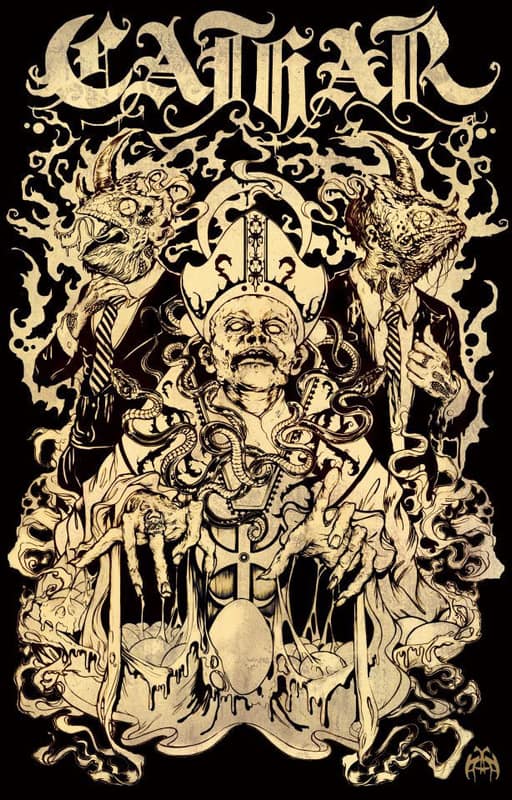
It's easy to get swept up in arena photo sets and 40-year-old pee stories, but the real health of the California metal scene isn't measured by Forum ticket sales — it's measured by how many bands below the marquee level are still grinding. The death metal, black metal, and doom corners of this state remain stacked: outfits like Dawn of Ouroboros, Stormdemon, and Cathar keep California's black metal lineage credible well past the point where Deafheaven made it fashionable nationally, and progressive and technical death metal acts like Consciously Dying and Calamitous Skies prove the technical end of the spectrum is just as alive. None of that made this week's national headlines, and that's precisely the point of covering this region closely — the best metal bands aren't always the ones getting the Blabbermouth exclusive.
What ties all of it together, from Slayer's Forum takeover to Queensrÿche's anniversary reflections to whatever Matt Sorum wants to say about Axl Rose this month, is a simple truth: California built a huge chunk of the vocabulary modern metal still speaks, and it keeps producing bands that refuse to let that vocabulary go stale. Whether you're chasing a legacy act's farewell run or discovering a new black metal band two years into its existence, the throughline is the same appetite for heaviness that filled the Forum this week and that keeps clubs from Sacramento to San Diego packed on any given Tuesday.
If you're trying to plan around any of this, check the upcoming shows page before you commit to a weekend — California's calendar is getting more crowded by the month between legacy tours and the underground bands opening for them. And if your band is part of that underground and you don't see yourselves represented yet, submit your band and get in the conversation.